
By Abhai Kaul
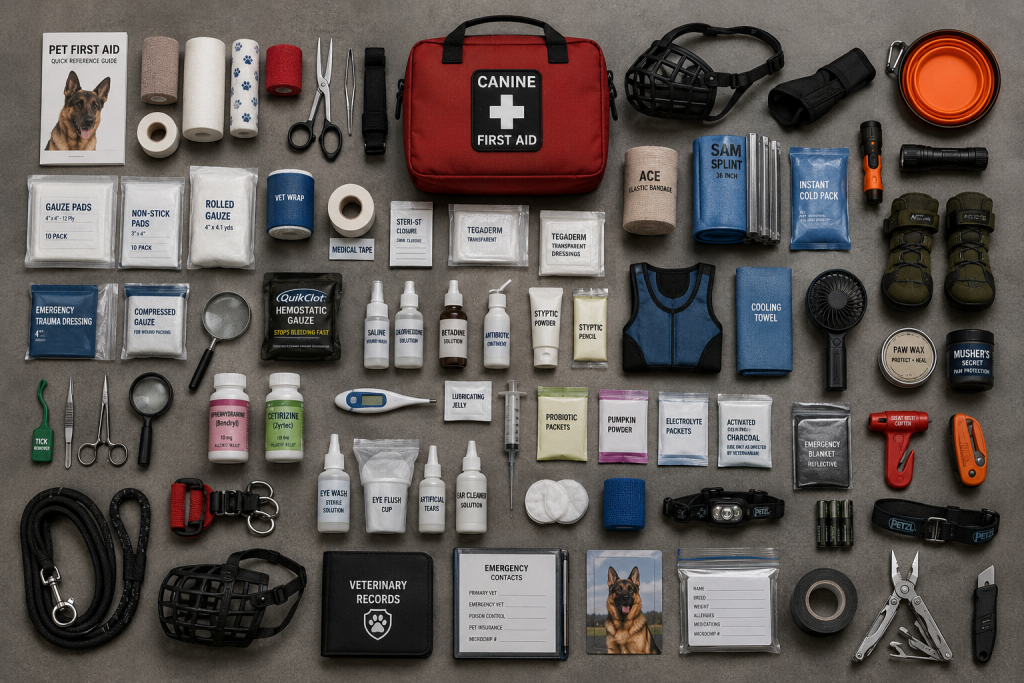
A comprehensive dog first aid kit should include wound care supplies, bleeding control materials, paw protection, cooling equipment, allergy medications, gastrointestinal support, emergency identification documents, and vehicle safety equipment. For long-distance travel, dog shows, camping, and working dog events, owners should also carry a digital thermometer, emergency muzzle, splints, cooling gear, veterinary records, and a 72-hour disaster preparedness module.
When most people think of a dog first aid kit, they picture a small pouch with a few bandages, tweezers, and some antiseptic wipes. That may be enough for a short walk around the neighborhood. It is not enough when you are traveling hundreds of miles with your dog to a conformation show, IGP trial, herding event, camping trip, training seminar, or family vacation. Over the last 25 years, I have spent countless weekends on training fields, fairgrounds, show grounds, hotels, campgrounds, and highways traveling with German Shepherd Dogs. During that time, I have seen everything from torn paw pads and broken nails to heat exhaustion, allergic reactions, diarrhea, dehydration, and injuries that required immediate stabilization before veterinary care was available. A well-stocked dog first aid kit is not just about treating injuries. It is about buying time, preventing complications, and safely getting your dog to professional veterinary care.
This guide outlines what I believe is the most comprehensive dog travel first aid kit available, specifically designed for serious dog owners, competitors, breeders, trainers, and anyone traveling long distances with their canine companion.
Why Every Traveling Dog Needs a Comprehensive First Aid Kit
Emergencies rarely happen at convenient times. The nearest emergency veterinarian may be several hours away. Cell phone coverage may be poor. You may be parked in a remote training field or traveling through unfamiliar territory. Having the proper equipment can make the difference between a manageable situation and a true emergency. A properly equipped canine first aid kit should address:
- Traumatic injuries
- Bleeding wounds
- Paw injuries
- Heat-related emergencies
- Allergic reactions
- Gastrointestinal upset
- Eye and ear problems
- Vehicle emergencies
- Natural disasters and evacuations
Trauma and Bleeding Control Supplies
One of the most common injuries encountered during dog shows, training events, and road trips involves cuts, lacerations, torn nails, and paw injuries.
Essential Wound Care Supplies
Cleaning and Disinfection
- Sterile saline solution
- Chlorhexidine solution
- Chlorhexidine wipes
- Betadine solution
- Antibiotic ointment approved for dogs
Bandaging Materials
- Sterile gauze pads
- Non-stick wound dressings
- Rolled gauze
- Medical tape
- Vet wrap
- Steri-Strips
- Tegaderm dressings
Bleeding Control
- Styptic powder
- Styptic pencil
- Hemostatic gauze
- Compression bandages
- Emergency trauma dressing
Most commercial dog first aid kits stop at gauze and vet wrap. For anyone traveling extensively with dogs, hemostatic gauze is one of the most valuable additions you can make.
Orthopedic Injuries and Working Dog Emergencies
Active dogs can experience sprains, strains, and limb injuries while hiking, training, competing, or playing.
Limb Stabilization Equipment
- SAM splint
- Foldable aluminum splint
- Elastic support wraps
- Cohesive bandages
Cold Therapy
- Instant cold packs
- Reusable gel ice packs
- Cooling wraps
Temporary stabilization can help prevent further injury while transporting your dog to a veterinarian.
Paw Injury and Foot Care Kit
Paw injuries are among the most common problems encountered during travel.
Hot pavement, gravel parking lots, broken glass, sharp rocks, and rough training fields can all cause damage.
Paw Protection Essentials
- Emergency dog booties
- Waterproof boots
- Paw wax
- Paw balm
- Moleskin padding
Nail Injury Supplies
- Nail clippers
- Dremel tool
- Extra grinding wheels
- Styptic powder
- Hemostats
A torn toenail can create significant bleeding and pain. Being prepared can prevent a minor injury from becoming a major problem.
Digestive Emergencies and Travel Stomach Upset
Travel often disrupts normal feeding schedules and exposes dogs to unfamiliar environments.
Digestive issues are among the most common reasons owners seek veterinary attention while traveling.
Gastrointestinal Support Kit
Digestive Health
- Probiotic packets
- Pumpkin powder
- Bland diet packets
- Oral syringes
Hydration Support
- Electrolyte solutions
- Collapsible water bowls
- Portable water storage
Monitoring Equipment
- Digital rectal thermometer
- Lubricant packets
A thermometer is one of the most overlooked tools in canine first aid. It provides valuable information during illness, heat stress, or suspected infection.
Heat Stroke Prevention and Emergency Cooling
Heat stroke remains one of the most serious and preventable emergencies affecting dogs. This is especially important for working breeds such as German Shepherd Dogs that frequently travel and compete during warm weather.
Heat Emergency Supplies
- Cooling vest
- Cooling towels
- Battery-powered fan
- Spray bottle
- Electrolyte solution
- Reflective emergency blanket
- Digital thermometer
Signs of Heat Stress
- Excessive panting
- Bright red gums
- Weakness
- Vomiting
- Collapse
- Elevated body temperature
Every serious dog traveler should maintain a dedicated heat emergency module within their first aid kit.
Allergic Reactions, Bee Stings, and Tick Removal
Travel exposes dogs to insects, plants, and environmental allergens they may never encounter at home.
Allergy and Insect Kit
- Diphenhydramine (Benadryl)
- Cetirizine (Zyrtec)
- Tick removal tool
- Fine-tip tweezers
- Magnifying glass
Always consult your veterinarian regarding proper medication dosages before traveling. Create a dosage chart specific to each dog and keep it inside your first aid kit.
Eye and Ear Emergency Supplies
Dust, grass seeds, grooming products, and environmental debris can all cause irritation.
Eye Care
- Sterile eye wash
- Eye flush cup
- Artificial tears
Ear Care
- Ear cleaning solution
- Cotton rounds
- Ear wrap materials
Early intervention may prevent a minor irritation from becoming a significant problem.
Vehicle Emergency Equipment for Dog Travel
Many emergencies occur around vehicles rather than during training or competition.
Vehicle Safety Supplies
- Slip lead
- Backup leash
- Backup collar
- Basket muzzle
- Soft emergency muzzle
- Headlamp
- Flashlight
- Spare batteries
- Seat belt cutter
- Window punch
An injured dog may react differently than normal, even if they are typically calm and friendly. A properly fitted muzzle can protect both the dog and handler during emergency treatment.
Disaster and Evacuation Preparedness
Natural disasters and unexpected evacuations can occur without warning. Your dog first aid kit should include emergency survival supplies.
Emergency Preparedness Module
Food and Water
- 72-hour food supply
- Water pouches
- Collapsible bowls
Shelter
- Emergency blanket
- Waterproof tarp
- Towels
Documentation
- Rabies certificates
- Vaccination records
- Microchip information
- Recent photographs
Having documentation readily available can be critical during emergency sheltering situations.
Essential Veterinary Records to Carry
One of the most important components of any canine travel kit is information. Store these items in a waterproof folder.
Include:
Identification
- Dog’s registered name
- Call name
- Microchip number
- Current photographs
Medical Information
- Vaccination records
- Medication list
- Known allergies
- Health insurance information
Veterinary Contacts
- Primary veterinarian
- Emergency veterinarian
- Veterinary specialists
Baseline Information
- Current weight
- Normal temperature range
- Emergency medication dosages
In many emergencies, accurate information is just as important as medical supplies.
Equipment Most Dog Owners Forget
After decades of traveling with dogs, these are the items most commonly overlooked.
Handler Safety Equipment
- Nitrile gloves
- CPR mask
- Human first aid kit
- Tourniquet
- Pain relievers
- Electrolytes
If the handler becomes injured, the dog immediately becomes part of the emergency.
Field Repair Supplies
- Multi-tool
- Utility knife
- Duct tape
- Zip ties
- Carabiners
- Paracord
Kennel Management Supplies
- Spare crate hardware
- Absorbent crate pads
- Waterproof blankets
- Extra towels
Identification and Tracking
- GPS tracker
- Spare ID tags
- Permanent marker
Building the Ultimate Dog Travel Emergency System
The goal of a first aid kit is not to replace veterinary care. Its purpose is to:
- Stabilize injuries
- Prevent complications
- Reduce pain and discomfort
- Provide temporary care
- Safely transport your dog to professional medical treatment
For those who regularly travel with dogs for conformation shows, IGP trials, agility competitions, camping trips, hunting adventures, or family vacations, a basic pet store first aid kit simply is not enough. Think beyond a first aid kit and build a complete canine travel emergency system.
Your future self—and your dog—may one day be grateful you did.
Frequently Asked Questions
What should every dog first aid kit contain?
Every dog first aid kit should include gauze, vet wrap, antiseptic solution, tweezers, a digital thermometer, emergency contact information, and a slip lead.
Is Benadryl safe for dogs?
Benadryl is commonly used in dogs for allergic reactions, but dosage should always be discussed with your veterinarian before administration.
What is the most commonly overlooked item in a dog first aid kit?
A digital thermometer is one of the most overlooked yet valuable tools for assessing illness, heat stress, and infection.
Should I carry a muzzle in my dog first aid kit?
Yes. Even the most well-trained dog may bite when frightened or injured. A properly fitted muzzle is an important safety tool during emergencies.
How often should I inspect my dog first aid kit?
Review your kit every three to six months. Replace expired medications, replenish used supplies, and update veterinary records as needed.
About the Author
Abhai Kaul is a lifelong German Shepherd Dog breeder, trainer, competitor, and judge apprentice with more than 25 years of experience traveling extensively with working and show dogs throughout North America and Europe. Through his kennel, Von Nummer-Eins German Shepherd Dogs, he advocates for the Total German Shepherd Dog, emphasizing health, temperament, working ability, and practical canine management.