
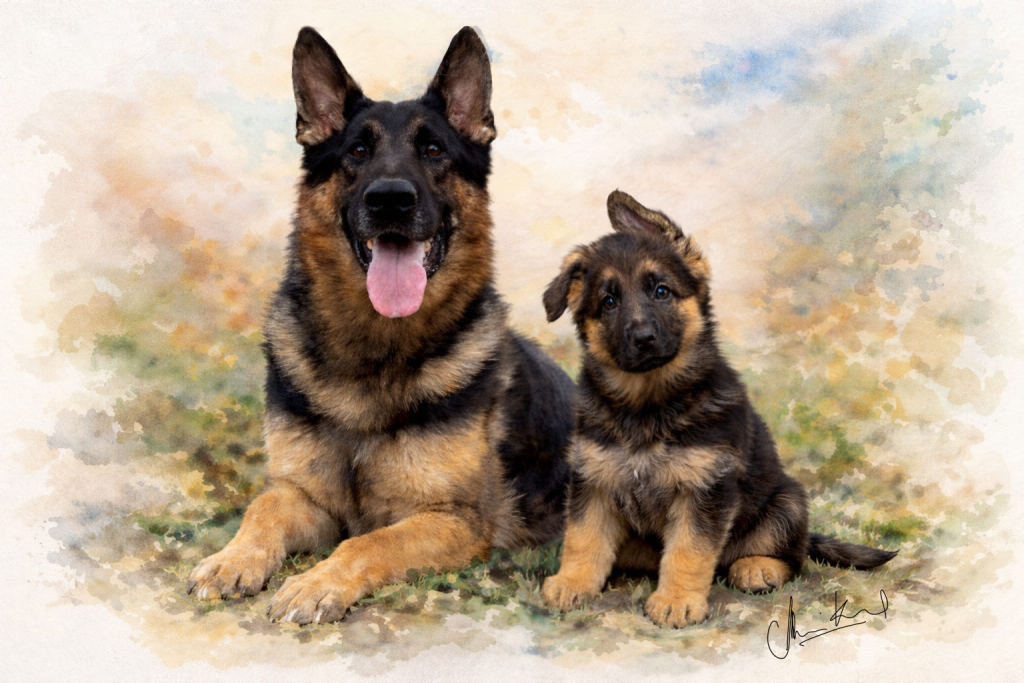
By Abhai Kaul • Von Nummer Eins German Shepherds (VAGSD.com)
Most people picture the end result: A stable, confident German Shepherd who’s great with the family, neutral in public, sensible with strangers, and easy to live with. What they don’t picture is the 12 months of actual work it takes to get there.
The modern German Shepherd, especially one bred for working clarity, athleticism, and nerve, does not grow into that dog by accident. And the divide between the dogs people dream of and the dogs they end up with usually comes down to one inconvenient reality:
A puppy is the cheapest part of the process. The first year is the real cost. This isn’t said to scare anyone. It’s said because the breed deserves honesty, and the people buying them deserve clarity.
Most Homes Underestimate the First Year: By a Lot. If you bring home a puppy, you aren’t adding a dog to your home. You’re taking on a full-time developmental project. That project includes:
• Building foundational obedience before bad habits form
• Shaping neutrality toward people, kids, dogs, noises, and environments
• Creating impulse control and frustration tolerance
• Managing months of adolescent pushback
• Setting boundaries when the dog is bigger, louder, and testing you
• Daily structure, not “when we have time” structure
This isn’t “a few sessions a week.” It’s every single day for the better part of a year. The reality is glaring:
Most families don’t have the time, consistency, or experience to raise a working-bred German Shepherd without gaps. And the dog you end up with at 18 months is shaped almost entirely by what happens, and what doesn’t happen, during that first year.
The Hidden Cost No One Calculates: Time.
Here’s the part no breeder website ever tells you plainly, A well-raised German Shepherd requires:
• 2–3 hours of structure daily (walks, training reps, engagement, decompression)
• Weekly environmental exposure (hardware stores, traffic, fields, noise, surfaces)
• Supervision around other dogs and children
• Crate time, house manners, and consistent rules
• Pressure exposure so the dog doesn’t turn into a soft, anxious adult
Do this correctly, and you get a phenomenal dog. Miss steps or get inconsistent, and the breed will expose those gaps. There are no shortcuts, only consequences.
Why a Trained Adult Makes Sense for Many Families
A finished young adult from a serious program gives you something a puppy cannot: Certainty.
A trained adult is a dog with:
• Stable nerves already proven in real environments
• predictable temperament with adults, kids, and animals
• known energy levels and working ability
• established off-switch at home
• clarity in obedience and public neutrality
• none of the turmoil of adolescence
You aren’t guessing, you aren’t hoping and you certainly aren’t gambling on genetics + good intentions. You’re selecting a known dog: temperament tested, environmentally proofed, and fully out of the unpredictable phases puppies cycle through. For many families, especially those with children, busy schedules, or limited training experience: this isn’t just the easier choice, it’s the responsible choice.
The Honest Bottom Line
Puppies are wonderful. They’re a blank slate with endless potential. I like to call them wet clay that you can mould in your image of ideals, but potential only becomes reality through:
• hundreds of hours of repetition
• deliberate exposure to the world
• consistent correction and clarity
• discipline during adolescence
• structured engagement
• and a handler who knows what they’re shaping
A trained adult compresses all of that into a dog who is ready for real life right now: steady, predictable, finished. For many homes, that is the version of the breed they were searching for all along.
Related Links:
1. Responsible German Shepherd breeding
2. Temperament and nerve strength
3. Understanding forehand, structure, and balance