
By Abhai Kaul | Von Nummer-Eins German Shepherds | VAGSD.com
See Also: German Shepherd Breeding Philosophy, Our Dogs, Planned Breedings
The German Shepherd Dog is in an era where exaggeration, trend chasing, and fragmented breeding philosophies have eroded the concept of a true line. Yet the solution has existed for more than a century, championed now by science with a 120 year old genome study on the breed, highlighting the issues that the bottlenecks have caused. There is a solution though, build a mother line, outcross, and return to that mother line through disciplined bookending.
This article outlines a replicable system for breeders who want long-term consistency, not one-off litters.
Why the Mother Line Is the Core of Every Lasting Breeding Program
Sires change fashions, Dams anchor legacies. A strong mother line is the only structure in breeding that can reliably transmit: Consistent hips and elbows, Stable temperament, Sustainable working drive, Recognizable phenotype, Nervous system integrity, Learning style and trainability, Longevity across generations.
A dam line like this forms the genetic backbone of a kennel. If the sire is the spark, the dam line is the voltage regulator.
Where Most Breeders Go Wrong With Outcrossing
Most breeders outcross with good intentions: improving pigment, drive, or health, but lose their identity because they fail to plan the way back. One breeding to a popular stud or flavor of the month becomes two. Then three. Then the program becomes a patchwork of unrelated influences with no coherent signature.
But heterosis is not a direction. It is a temporary reset. If you do not return to the mother line, the program drifts until it becomes unrecognizable.
The Blueprint: Outcross → Evaluate → Bookend
1. Start With a Proven Mother Line
A real mother line is not “a good bitch.” It is a series of bitches carrying the same qualities over multiple generations.
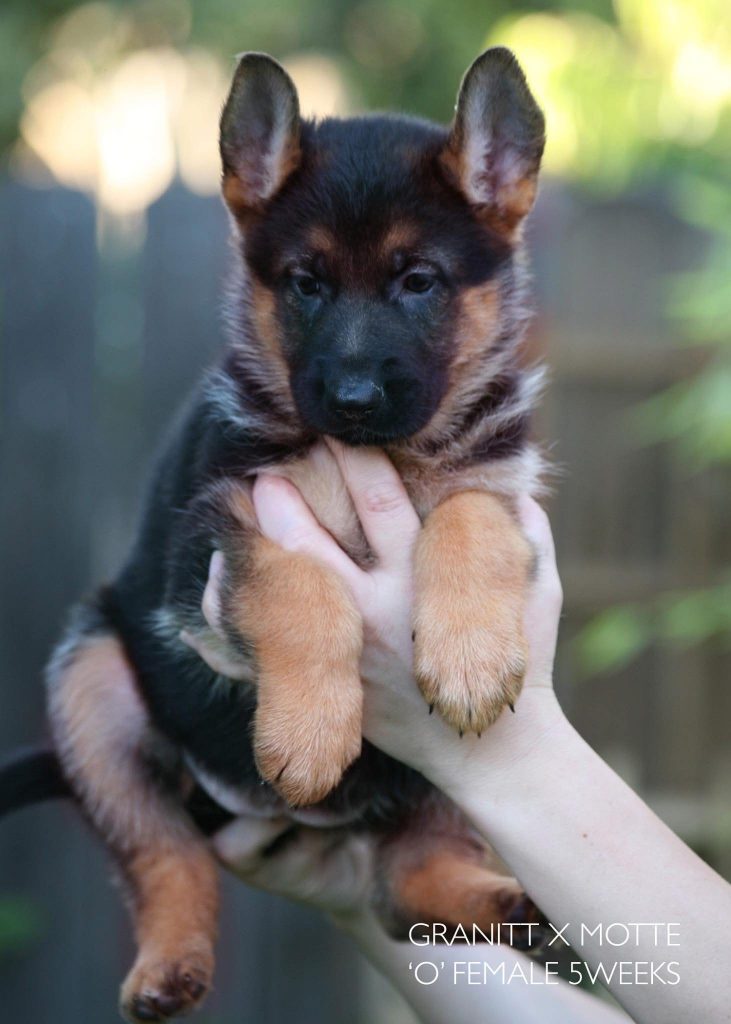
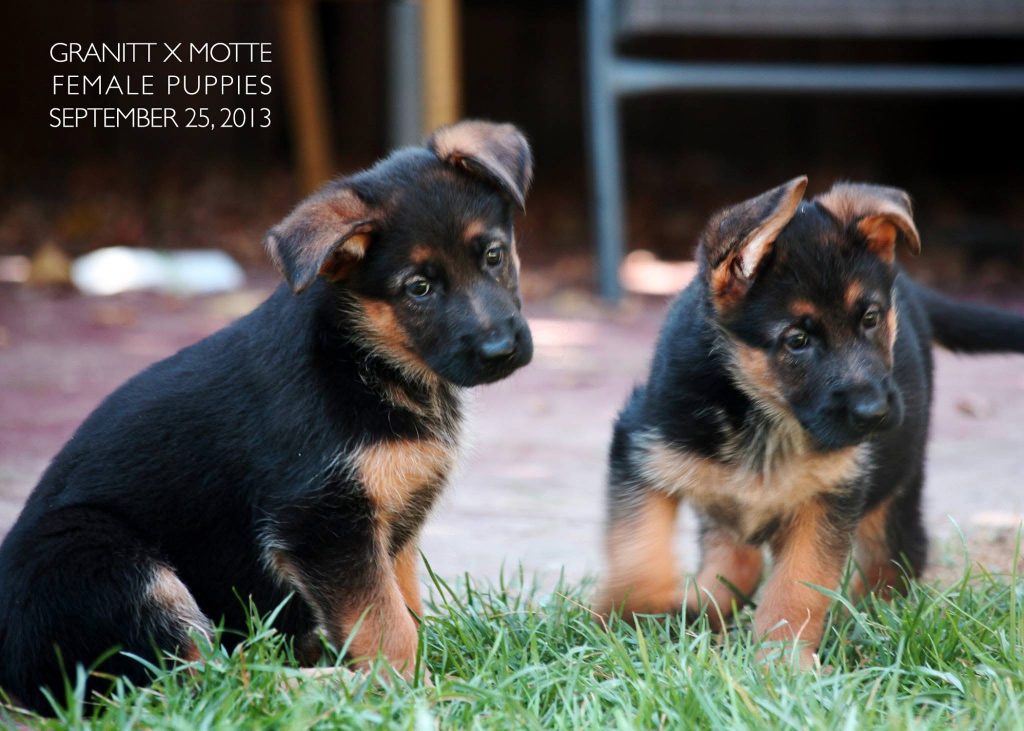
The family created from Motte vom Suentelstein as one of the legs in my breeding program is an example:
- O-litter and J-Litter uniformity
- Consistent orthopedic soundness
- High trainability and pressure tolerance
- Moderate, athletic structure
- Repeatable, sober expression
This predictability is your “home base.”
2. Perform a Structured Outcross When Needed
Outcrosses should be functional, not fashionable. I have always said as I have found it to be true with experience, a dog that has plenty of something will give that to the next generation. That dog should find judicious use in breeding and even outcross with as it will (if present): Improve motor drive or grip quality, Add clarity or hardness, Introduce ligament tightness, Add longevity or health depth and of course Reset genetic load.
That being said, an outcross should expand your toolkit, not replace your identity.
3. Bookend: Return Immediately to the Mother Line
This is the step that defines a real breeder: The very next generation must be bred back into the original mother line. Not eventually, not “with convenience,” immediately.
Bookending has several important functions: Restores the phenotype, Reasserts temperament, Re-aligns proportions and type, Keeps nervous system traits intact, Ensures long-term genetic continuity.
This is how you “come home” after heterosis.
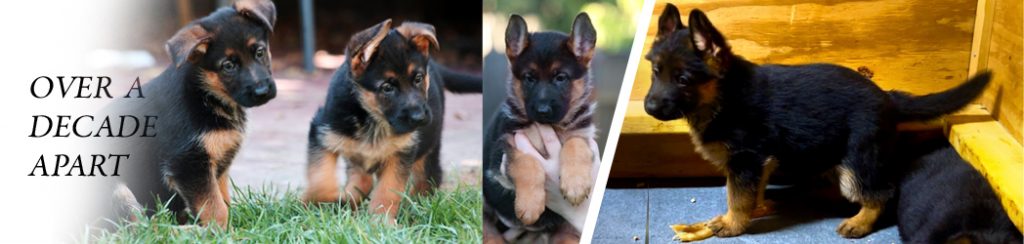
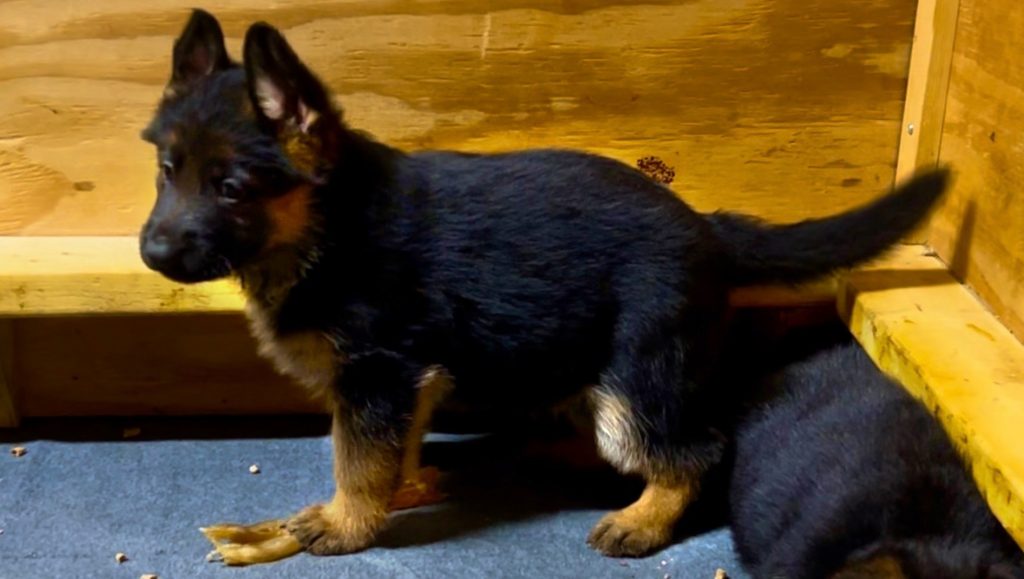
Why Puppies Still Resemble Each Other After 10-15 Years
When you outcross and then bookend correctly, the mother line dictates type: head, shoulder, pastern, and topline. The mother line even dictates height-to-length ratios and I’d go even as far as to say, in my experience, the mother line also dictates energy modulation and learning style.
This is why, even with sires from entirely different genetic and phenotypic backgrounds, the descendants of a strong familial motherline still look like cousins more than a decade apart. That consistency is not coincidence. It is the genetic gravity of a strong mother line.
What This Means for the Future of German Shepherd Breeding
The breed is fracturing between the extremes. We often see extreme angulation and non functional proportions in showlines, Unrealistically obsessive compulsive and wired working lines, Breeding decisions driven by titles instead of temperament, Panic breeding based on trends to sell puppies rather than structure and sound character, Loss of moderate, dual-capable dogs
The stable and producing mother-line with judicious heterosis model is the antidote.
It allows breeders to Gain new traits without losing old ones, Strengthen genetic diversity without losing identity, Preserve functional structure across generations, Maintain a recognizable, stable family of dogs, Avoid the “drift and dissolve” trap seen in many modern kennels.
This is not an unproven theory. It is a system that shows tangible success in long-term breeding.
The Mother Line Blueprint (Summary for Breeders)
- Identify or build a strong mother line with reproducible traits.
- Use heterosis sparingly and intentionally to correct or enhance specific areas.
- Breed back into the mother line in the very next generation.
- Select females that represent the line, not the outcross.
- Repeat the cycle as needed, but always return to the maternal anchor.
This is how you preserve type, temperament, and structure across decades, not just litters.
Terminology Clarification: Outcrossing, Outbreeding, and Backcrossing
In population genetics, outcrossing, outbreeding, and backcrossing describe distinct processes that are often incorrectly used interchangeably in dog breeding discussions. For the sake of technical accuracy, this article uses the terms as follows:
- Outbreeding refers to mating unrelated or distantly related individuals within the same breed population. In sufficiently large populations, outbreeding can reduce inbreeding coefficients, mitigate inbreeding depression, and rebalance specific traits without introducing foreign breed characteristics.
- Outcrossing, in its strict genetic sense, refers to a true cross between different breeds. This is not what is being advocated or described in this article.
- Backcrossing describes the intentional breeding of an outbred individual back into a defined line or family in order to recover type, temperament, and predictability while retaining selected gains from the outbreeding phase.
Throughout this article, the commonly used breeder shorthand “outcross” refers to intentional outbreeding within the German Shepherd Dog, followed by immediate backcrossing into a proven mother line. No inter-breed crosses are implied or supported.
This distinction is important, because the blueprint discussed here is grounded in population genetics within a closed breed, not in breed-opening strategies.
Why This Is Not “Opening the Breed”
In some breeding circles, true outcrossing has been interpreted as inter-breed crossing (for example, Malinois × German Shepherd) to “open” the gene pool.
That approach represents a fundamentally different philosophy.
True inter-breed outcrossing may increase genetic diversity, but it also introduces behavioral and neurological traits that cannot be selectively removed later without long-term instability. Once introduced, those traits do not disappear simply through backcrossing.
The blueprint outlined in this article deliberately avoids that path.
The goal of the mother-line blueprint described here is not to introduce extreme temperaments, alternate anatomy and working styles, or foreign behavioral traits into the German Shepherd Dog. On the contrary, it is an attempt to preserve the German Shepherd’s unique balance: civil clarity, stability under pressure, and versatility across work, sport, and family life.